The Provenance Tax: When a Good Story Really Adds £40 to a UK Second-Hand Sale
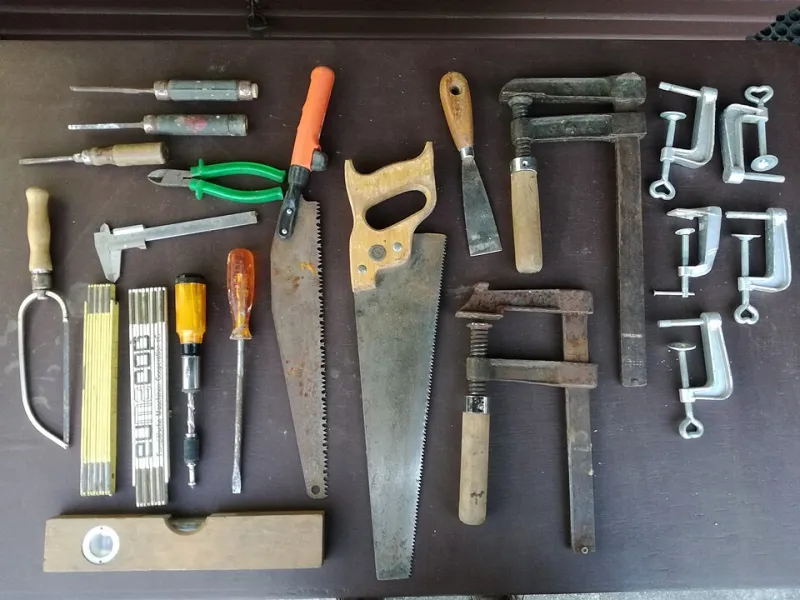
Photo: Ctsu, CC BY-SA 4.0, via Wikimedia Commons
Scroll through any UK resale app in 2026 and you will notice something odd. The object is often the least interesting part of the listing. A drill is not just a drill; it is 'grandad's workshop stalwart, used on three generations of garden sheds'. A dress is not just a dress; it is 'bought in Liberty's in 1998, worn twice, stored in tissue paper'. A set of spanners becomes a slice of industrial romanticism. The story is doing some of the selling.
That is not automatically a bad thing. Provenance can be a legitimate signal of care, rarity and honest wear. But it can also be a soft-focus filter over a tired item. The trick for UK swappers is working out when a backstory is worth paying for — and when it is just a £40 markup with a nostalgic voiceover.
Why we pay for a past
Second-hand shopping has always been partly imaginative. You are not only buying a chair; you are buying the version of your home where that chair sits. A story helps you picture it. It also reduces risk. 'Only used twice' suggests low wear. 'House clearance' suggests a seller who wants rid of something quickly and may price accordingly. 'From a smoke-free, pet-free home' is less a narrative than a hygiene shortcut.
On swapping platforms, stories do a different job. They create permission. A battered item with a good story feels like a fair trade rather than a downgrade. If someone can say where it came from and why it matters, the swap feels less like a transaction between strangers and more like a handover between custodians. That is a real form of value, especially in categories where condition is hard to photograph: tools, kitchenware, textiles, musical instruments and anything with moving parts.
The catch is that stories are cheap to type. A listing can borrow the language of provenance without supplying any proof. In 2026, when AI-generated descriptions are everywhere, the gap between a charming paragraph and a verifiable history is worth watching closely.
The stories that actually hold value
Some backstories genuinely change what an item is worth. A few common ones stand up better than others.
Documented history. A receipt, service record, original box, manual or repair note turns a claim into evidence. 'Serviced in 2024' with a paperwork photo is worth more than 'well looked after'. For watches, cameras, bikes and power tools, paperwork can easily justify a double-digit premium.
Maker or provenance details that can be checked. A Liberty's label, a Stoke-on-Trent pottery backstamp, a British-made tool brand, a known furniture maker: these are facts you can research. They are not just mood music.
Specific, boring use. 'Used twice' is vague. 'Bought for a single DIY project in 2023, stored indoors since' is better because it is specific and slightly dull. Dull details are harder to invent and easier to test against wear patterns.
Honest wear with a reason. A few scratches on a workbench are fine if the seller says they came from actual work. A pristine 40-year-old tool with no explanation can be more suspicious than a worn one with a plausible life.
The stories that paper over cracks
The red flags tend to be emotional rather than factual. Watch for listings that spend more words on feelings than on condition. 'Beautiful energy', 'sad to see it go' and 'would suit someone who loves old things' are not descriptions; they are mood boards. They may be sincere, but they do not tell you whether the zip works.
Be wary of the 'house clearance' label when it is used to avoid answering questions. A genuine clearance is a useful context: the seller may not know the full history, so they should be pricing accordingly. If they are asking top dollar while claiming ignorance, the story is doing too much work.
Also treat 'bought in [smart shop] in [year]' as a useful clue, not a certificate. It can explain style and original quality, but it does not prove authenticity on its own. Ask for a label photo, a receipt or a close-up of the maker's mark. A good story should survive a request for detail.
A five-minute provenance audit
Before you let a narrative push you £40 higher, run a quick check.
- Separate claims from evidence. Highlight every factual statement in the listing. Which ones have photos or documents behind them?
- Match the story to the wear. If it was 'used twice', the soles, handles or blades should look it. If it was 'grandad's workshop workhorse', expect character marks — and ask whether they have been cleaned away.
- Ask one boring question. 'Can you send a photo of the serial number, label or base?' A genuine seller will usually oblige. A story-led seller may stall.
- Check the price against condition, not vibes. Search completed sales for the same item in similar condition. If the story is the only differentiator, you are paying for the telling, not the thing.
- Decide what the story is worth to you. Sentiment has a price, and that is allowed. Just name it. If you would still pay the same for the item with a plain description, the premium is optional. If not, negotiate.
When to ignore the story entirely
Some categories are better bought on condition alone. Cables, chargers, basic kitchen gadgets and anything safety-critical should be judged on function, testing and return options. A lovely tale about a 1990s food processor does not make the blades sharp or the seal safe. Likewise, if you are swapping rather than buying, be clear about what you are exchanging: a story for a story is fine, but a working item for a nostalgic one is not always a fair deal.
The same goes for selling. If you are the one writing the listing, provenance can help — but only if it is true and relevant. 'Bought in Liberty's in 1998' is useful if you can show the label. 'Only used twice' is useful if the condition backs it up. Otherwise, it is just decoration, and UK buyers in 2026 are getting better at spotting decoration.
The WeSwap take
A good backstory is not a con. It is part of what makes second-hand interesting. But it is not a substitute for condition, proof or a fair price. Treat provenance as a bonus, not a baseline. Ask for the boring details. Compare the story with the wear. And remember that the most valuable sentence in any listing is often the least romantic: 'Happy to send more photos.'
Swap smarter. Live greener.