The Battery Has a Backstory: Why Digital Product Records Are About to Change UK Second-Hand Tech
A second-hand phone listing that says ‘good battery’ is doing a lot of emotional heavy lifting. It could mean the battery was replaced last year. It could mean the seller has never checked. It could mean the phone dies at 38% on a cold Tuesday in Leeds. Soon, a scan might tell you which version of that story you’re actually buying — and that is where Digital Product Passports start to get interesting.
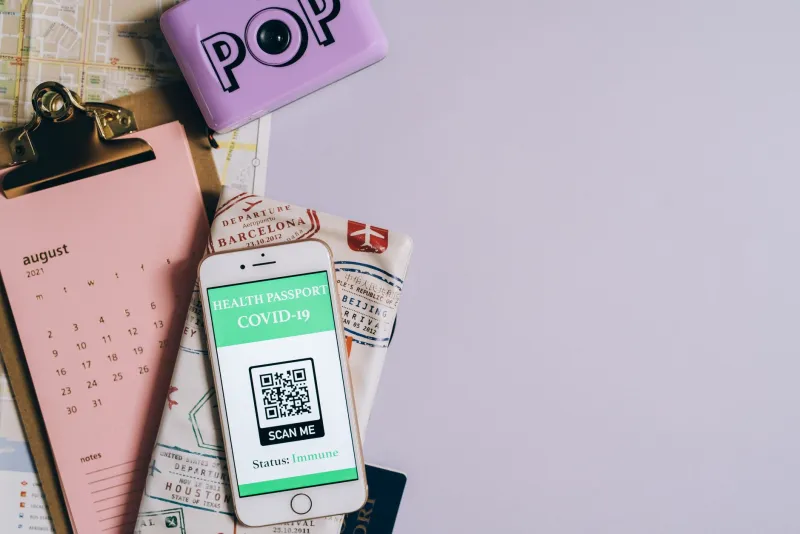
The idea is simple enough. A product gets a digital record, reachable through a QR code, NFC tag or web link. Instead of a paper manual that vanishes into a kitchen drawer, the record travels with the product. For electronics, batteries and appliances, that record could carry repair information, spare-part availability, material composition and battery health data. In 2026, this is still mostly a policy-and-pilot story rather than a mainstream UK checkout experience, but the ripple is already visible.
What a passport actually is — and isn’t
A Digital Product Passport is not a passport for you. It is a digital identity for a thing. Under the EU’s Ecodesign for Sustainable Products Regulation, priority products including electronics and batteries are being lined up for this kind of record. The EU’s battery rules also bring in a battery passport for certain batteries from 2027, which is why the conversation is accelerating now.
The passport is not a universal history report for every gadget. It is not a guarantee that the seller is honest, and it is not necessarily a public web page that anyone can browse. It could be a manufacturer portal, an app, a data standard behind a QR code, or a mix of all three. That matters, because the difference between a genuinely useful record and a glossy green badge is usually the boring stuff: who writes the data, who can update it, and whether it survives a change of owner.
Why UK swappers will feel it before Westminster does
The UK is not bound by the EU’s Ecodesign rules, and there is no identical UK-wide Digital Product Passport mandate sitting on the statute book. But the UK second-hand tech market does not operate in a sealed box. Manufacturers sell across borders. Platforms such as eBay, Vinted, Back Market and CeX operate in multiple markets. A phone made for the EU market may arrive in a UK swap with a passport link already printed on the box or embedded in the settings menu.
That means UK buyers and swappers will likely meet passports as a market feature before they meet them as a legal requirement. A listing might say ‘passport available’ the way it now says ‘original box’ or ‘receipt included’. The risk is that we treat that as a simple trust sticker. The opportunity is that we use it to make repair history and battery condition normal parts of the conversation.
The battery data is the headline act
Battery health is one of the most opaque parts of second-hand tech. Sellers say ‘holds charge well’. Buyers nod. Everyone quietly hopes. A passport that includes state of health, cycle count and replacement records could change that dance completely. It could also create a two-tier market: passport-backed devices that command a premium, and story-backed devices that rely on the seller’s word and a screenshot from a settings menu.
But the detail matters. If only authorised repairers can update the record, independent repair shops get locked out of the history they help create. If the passport freezes at the point of first sale and never updates after a battery replacement, it becomes a birth certificate rather than a living record. For UK swappers, the question is not just ‘does it have a passport?’ but ‘is it current, and who is allowed to change it?’
Three traps to watch: privacy, lock-in and passport washing
The first trap is privacy. A detailed product record can include serial numbers, service dates, ownership transfers and repair notes. Some of that can amount to personal data. If the passport is tied to an app account, a buyer might inherit a previous owner’s login, or need the seller to perform a digital handover before the physical one. That is already a familiar headache in smart-home gadgets. Passports should not make it worse.
The second trap is lock-in. A QR code that only works in one manufacturer’s app, or only while a subscription is active, is not a passport. It is a loyalty scheme with extra steps. If the record cannot be exported, printed or read by a third party, it is fragile. UK swappers should be wary of any system that makes the history of a product depend on the continuing goodwill of the company that made it.
The third trap is passport washing. This is when a brand slaps a sustainability badge on a product without giving buyers anything they can actually use. A passport that lists materials but hides repairability, or claims circularity while refusing to sell spare parts, is decoration. The useful version is dull and specific: can I get a screen? Can I replace the battery? Who repaired it last? What is the actual condition of the cell?
What platforms and households should do in 2026
For platforms, the sensible move is to ask for standard fields rather than inventing proprietary badges. Support transfer of records between users. Let independent repairers add verified work. Show when the record was last updated. Make it readable without an account where possible. A passport that only works inside one app is a walled garden, and walled gardens are not circular.
For households, start small. Keep digital receipts and service records in one folder. Save battery reports before you list a phone. Photograph the label and any repair paperwork. When buying or swapping, scan the code before you hand over cash or your old tablet. Ask who can update the record after the sale. If the answer is ‘nobody’, treat the passport as a nice extra rather than a reason to pay more.
The QR code is just the door. The value is in the record behind it. If Digital Product Passports arrive in the UK as open, transferable and repair-friendly tools, they could reward the people who keep gadgets going instead of replacing them. If they arrive as another app-shaped lock, they will be another thing to lose. In 2026, UK swappers have a chance to push for the first version — and to ask better questions than ‘does it have a code?’